Insurability (Life & Health)
Nicolas Denys, Head Of Employee Benefits, Group Risk Management, AXA Group

The Potential for Life Insurance Expansion in Middle-Income Population
Deep Banerjee, Senior Vice President & Treasurer, Protective Life Corporation
There is an untapped opportunity in the middle-income population in the U.S. for expansion of life insurance.

The BlackRock Investment Institute’s 2022 Midyear Outlook explores the shift to a new, more volatile regime through the lens of three investment themes – and translates them into updated asset views.
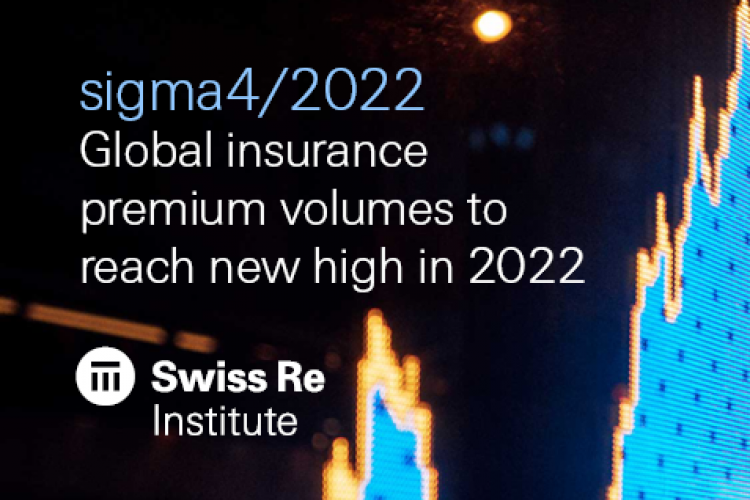
The global economy is slowing sharply and inflation is at multi-decades highs: we anticipate what we call "inflationary recessions" in many major economies over the next 12-18 months. Central banks are hiking interest rates, targeting price stability over economic growth. In our view, this is a notable positive to the current challenging conditions, on two fronts. It will help ward off 1970s-style stagflation. It also signals the end of the era of financial repression. For insurers, rising interest rates are a silver lining with investment returns set to improve.
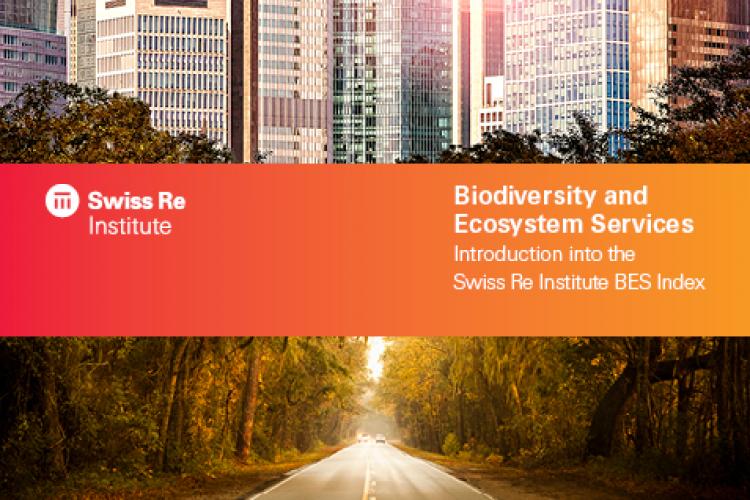
The Swiss Re Institute Biodiversity and Ecosystem Services (BES) Index assesses which economic sectors are most reliant on nature and evaluates the exposure each country has to BES decline.
Countries around the world depend on a range of vital natural services to help maintain the health and stability of their communities and economies. Better known as biodiversity and ecosystem services, these include food provision, water security and regulation of local air quality among others.

Read the WSJ articles on how Principal's actionable insights to power portfolios.
Martinos Yiorkas, Executive Director, Leads The Actuarial & Financial Analytics Team In EMEA W/S, Willis Re International
Rebecca Tan, Chief Distribution And Marketing Officer, Generali Life (Hong Kong) Limited, Generali Life Hong Kong
Hong Kong economy is externally oriented and highly dependent on trade with the world. In 2019, the value of Hong Kong's total merchandise trade reached HK$8,404.1 billion (US$1,072.5 billion)1 , or around 293% of the Gross Domestic Product (GDP) in that year. Hong Kong was the world's 8th largest trading entity in goods in 2019.
International equity markets rebounded in the third quarter, enough so that most of the major indexes recovered to near where they were on January 1. Hopes for a vaccine-driven reduction in COVID infections and for more government financial stimulus (both of which seemed less likely by late October) gave investors some renewed optimism.